 Pascal Arogorn Ibe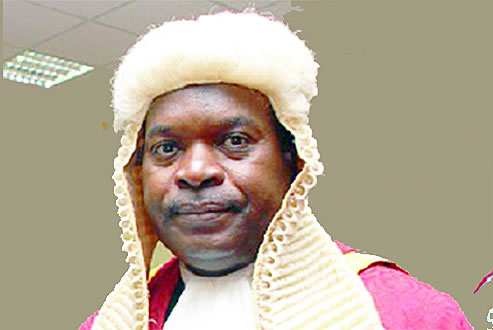
Ishaq Usman Bello, chief judge of the federal capital territory (FCT) high court, may not be selected as judge at the International Criminal Court (ICC).
President Muhammadu Buhari nominated Bello as Nigeria’s candidate in June 2020.
However, in a report of the advisory committee on the nomination of judges, the ICC said Bello lacked knowledge of the workings of the court.
Although the FCT CJ has a master’s degree in international criminal law from Ahmadu Bello University, Zaria, “where his dissertation was on the topic of individual criminal responsibility under the Rome Statute”, the ICC noted that “the candidate appeared notably to have a very limited knowledge of the Rome Statute, the practices and procedures of the court and its jurisprudence”.
“Based on both his professional experience as well as his answers during the interview, and bearing in mind particularly his lack of detailed knowledge of the workings of the court, the committee concluded that the candidate was only formally qualified for appointment as judge of the International Criminal Court,” the report read.
Owing to the COVID -19 pandemic, the committee had conducted virtual interviews between August 12 and August 28 for all the nominees.
Out of 20 candidates, 10 were ranked “highly qualified”, three were “qualified” while seven including Bello were “formally qualified”.
Only six judges will be elected to fill in one-third of the court’s 18 judicial seats.
The elections which are scheduled for the 19th session of the assembly of states parties will be held at the United Nations, New York, from December 7 to December 17, 2020.
The ICC which began functioning on July 1, 2002, is an intergovernmental organisation and international tribunal which has jurisdiction to prosecute individuals for the international crimes of genocide, crimes against humanity, war crimes, and the crime of aggression.
The ICC sits at The Hague, Netherlands. The court, however, lacks universal territorial jurisdiction, and may only investigate and prosecute crimes committed within member states, nationals of member states, or crimes in situations referred to the court by the United Nations security council.

 admin
admin