 admin
admin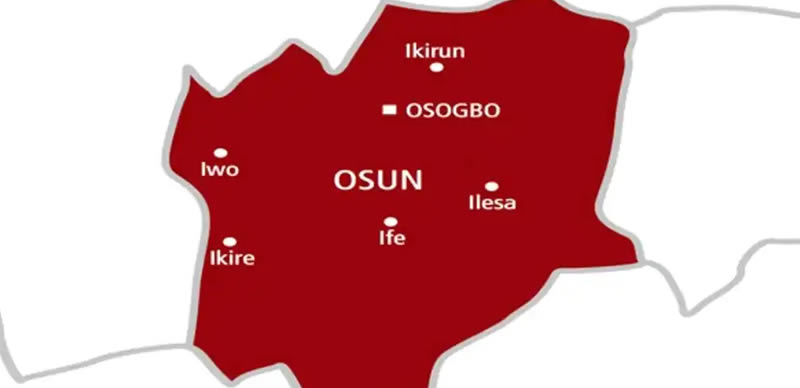
Osun State will elect its next governor tomorrow, Saturday, August 15, 2026, in a poll rescheduled by the Independent National Electoral Commission (INEC) from August 8. The election will see 2,339,233 registered voters decide among 15 parties.
But beyond the ballot, this election is a referendum on the soul of Nigeria’s civil service state.
1. The Party Twist: Can Personality Beat Party?
In an unprecedented move, one of the major candidates is seeking re-election not in the party under which he was first elected but in a fringe party. The candidate announced his defection and emerged as the party’s sole candidate at a primary in Osogbo, where he polled over 140 votes from delegates across 30 LGAs. INEC has since confirmed him as the candidate.
The question: Will Osun follow the man or the party machinery?
2. Zoning: The Wound That Won’t Heal
Osun map
Osun is in the South-West region of Nigeria.
Osun has three senatorial districts but six historical divisions: Osogbo, Ila, Ijesa, Ife, Ede, and Iwo. Fact: Osun West (Ede axis) has produced the governor twice – both from Ede town. Ife Federal Constituency and Osogbo Federal Constituency have never produced a governor since Osun was created in 1991.
That resentment is loudest in Osun East – Ile-Ife, Ilesa, and Ijebu-Jesa – home to over 600,000 voters. APC’s campaign has subtly fed on that feeling of marginalisation.
3. Federal Might vs State Magic
Losing Osun in 2022 was a blow for the ruling national party. Winning it back a year before the 2027 general election is strategic.
But one of the frontrunners has high personal approval, especially among youths and women, and has maintained cordial ties with traditional institutions.
4. The Real Issue: Debt, Salary, and Survival
Osun’s economy is not industrial. It is a salary economy. Historically, Osun ranked among Nigeria’s most indebted states, with a debt profile once put at over N170bn and once spending as much as 91% of its federal allocation on debt service.
For voters, the memory of half-salary payments and pension arrears is still fresh. Prompt salary payment has become the ultimate campaign message in Osun.
5. Gold and Cocoa: Rich State, Poor People?
Osun sits on Nigeria’s largest gold deposit. Ilesa, Itagunmodi, and Imosan communities are known gold towns.
Yet investigations show these once-thriving cocoa farming communities are now grappling with the devastating impact of illegal gold mining.
Nigeria’s first large-scale gold mine, Segilola Resources, operates in Osun, but most mining is artisanal, unregulated, and environmentally damaging. Youth unemployment and underemployment remain high, and many young voters are not interested in farming.
What To Watch Tomorrow
1. BVAS and IReV: Osun was BVAS’s first big test in 2022. Tomorrow tests whether it can work in the remote Ijesa hills without network failures.
2. Turnout: In 2022, less than 50% of registered voters voted. Will Accord’s weak structure affect mobilisation?
3. Vote Buying and Security: Ife/Modakeke, Iwo, and Osogbo are traditional flashpoints. EFCC and security agencies have promised heavy deployment.
Bottom Line
Will Nigeria have its first proof that in 2026, a personal brand can defeat established party machines – a preview of 2027? Alternatively, will the South-West fully realign with the centre and prove that fiscal arguments have beaten populism?
Credit: Channels Television