 admin
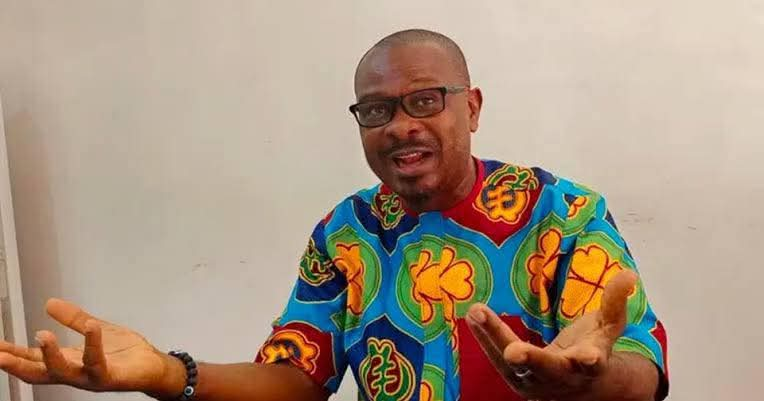
By Okechukwu Nwanguma
The Southeast cannot achieve lasting security while residents face violence from armed groups and alleged abuses by security agencies, the Executive Director of the Rule of Law and Accountability Advocacy Centre, Okechukwu Nwanguma, has warned.
In an opinion article, Nwanguma argued that the region’s residents are caught between criminal groups accused of killings, kidnappings, extortion and forced sit-at-home enforcement, and security personnel accused of arbitrary arrests, torture, unlawful detention, enforced disappearances and extrajudicial killings.
He maintained that condemning abuses by security agencies does not amount to supporting armed groups, just as opposing criminal violence cannot justify unlawful actions by government forces. According to him, every victim deserves justice, regardless of whether the alleged perpetrator is a criminal or a state agent.
Families demand answers over missing relatives
Nwanguma referred to a joint media conference held in Enugu on October 17, 2026, by the Southeast Human Rights Bureau, Oganihu Igbo Development Foundation and the International Society for Civil Liberties and Rule of Law. The conference, titled The Missing, the Detained and the Dead, featured accounts from families searching for relatives allegedly arrested during security operations.
According to the accounts presented, some detainees were allegedly moved between security formations and detention facilities outside the Southeast, including Wawa Military Barracks, DSS facilities, Kuje and Suleja custodial centres, as well as locations in Abuja. Some families reportedly remain unaware of the whereabouts of their relatives, while others alleged torture, denial of medical care, prolonged detention and deaths in custody.
Nwanguma acknowledged that the allegations vary in evidential strength, with some supported by judicial or coronial records and others based on accounts from relatives, survivors and advocates. However, he insisted that credible allegations require proper investigation rather than official silence.
He said the government must account for anyone taken into custody, including identifying the arresting officers, explaining the legal basis for the arrest and disclosing where the detainee was taken. Families should also be informed about transfers, court proceedings, releases or deaths.
Calls for detention and checkpoint audits
The rights advocate called on the Federal Government to investigate allegations involving Wawa Military Barracks and other detention facilities. He urged authorities to conduct a comprehensive audit of detainees, preserve custody and transfer records, and make relevant medical, court and burial documents available for independent examination.
Where deaths or secret burials are alleged, he recommended protecting suspected burial sites and involving independent forensic experts in recovering and identifying remains through DNA testing.
He also raised concerns about alleged extortion and harassment at security checkpoints across the five Southeast states. While acknowledging that checkpoints may be necessary to address attacks, kidnappings and other crimes, he said they should not become platforms for demanding money from motorists and commercial drivers.
Nwanguma urged the government to audit checkpoints, identify authorised locations and responsible commanders, investigate complaints and dismantle those operating without legitimate justification. He also called for better supervision and secure channels through which members of the public can report misconduct.
Tinubu urged to establish investigation panel
Nwanguma stressed that accountability must extend to armed groups responsible for killings, kidnappings, attacks on security personnel, destruction of property and the enforcement of unlawful sit-at-home orders. He argued that the government must distinguish itself from criminal organisations through respect for the Constitution, transparency and lawful conduct.
He called on President Bola Tinubu to establish an independent, time-bound investigation and tracing panel involving the National Human Rights Commission, the Attorney-General of the Federation, security agencies, legal and medical experts, civil society groups and representatives of affected families.
Under his proposed timeline, the government should issue evidence-preservation directives and establish secure reporting channels within seven days. The first phase of a detainee and detention-facility audit should be completed within 30 days, while checkpoint reviews and preliminary forensic assessments should be concluded within 60 days.
He further proposed that a reasoned report and implementation plan be published within 90 days, alongside the creation of a permanent Southeast Missing and Disappeared Persons Documentation and Response Mechanism.
Nwanguma said the mechanism should provide families with case files, regular updates and protection from reprisals, while survivors should receive medical care, legal assistance and rehabilitation.
He concluded that public cooperation is essential to effective security, but cannot be secured through fear, unlawful detention or alleged abuses. He maintained that the government must protect residents from armed groups without becoming another source of insecurity.
“No gunman should be above the law. No security agency should be above the law. And no Nigerian should disappear merely because the state took custody of him or her,” he wrote.