 admin
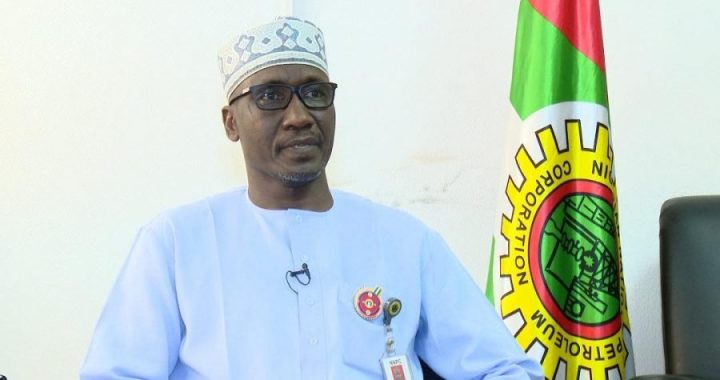
Forty eight hours after being summoned by the Senate, the Group Chief Executive Officer (GCEO) of the Nigerian National Petroleum Company (NNPC) Limited, Mele Kyari, has now appeared before the joint committee on appropriations.
The Senate had issued a 24-hour ultimatum on Wednesday to the NNPCL boss after an observations that he had in previous occasions, shunned summons by the Senate to appear before its ad-committee probing over 11 trillion naira expenditure on turn around maintenance of refineries in the country between 2010 and 2023.
Responding to questions by the senate committee on appropriations on the potential drop in pump price of petroleum owing to the expected functionality of refineries, Kyari clarified his comment after he was interrogated again. He explained that it might be possible to have a reduction, but it is not the main objective of the refineries.
He buttressed that maintaining the energy security target has fostered the confidence that in 2024, Nigeria will become a net exporter of petroleum products.
The NNPCL boss affirmed that no subsidy is charged to the federation, adding that the NNPC has contributed 4.45 trillion naira as direct revenue into the federation in a combination of taxes, royalties and dividends and paid 406 billion naira as dividend to Federal Government’s account from July 2023.
According to him, Nigeria does not have credible data for PMS consumption in the country because of the absence of the instrument to measure.
The Chairman of the Senate Appropriation Committee, Senator Adeola Olamilekan, had on Wednesday, directed Kyari to appear before the committee in 24 hours.
Olamilekan, who asked Kyari to appear in company of the Executive Secretary of the Nigerian Upstream Petroleum Regulatory Commission (NUPRC), warned that failure to appear undermines the legislature and sabotages the process.
They are required to present the list of all individual companies operating with OML licenses in Nigeria as well as total production output approved on a daily basis.
The lawmaker expressed concerns that some of the revenues required to drive the 2024 budget was attributed to the NNPCL, which according to him, was owned by the Federal Government and responsible to it, and by extension the three arms of government.