
 admin
admin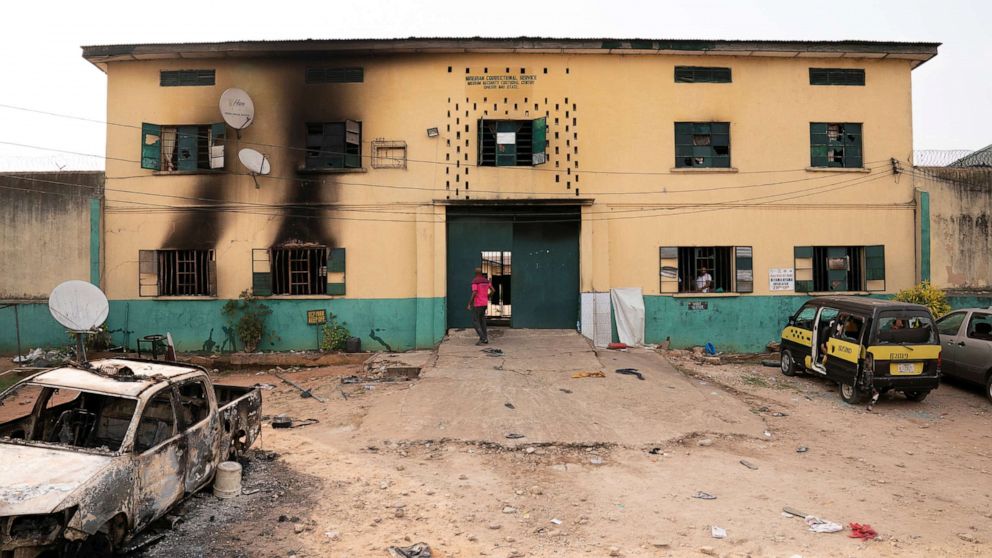
Nigeria’s correctional facilities, ostensibly designed to rehabilitate offenders and protect society, have instead become operational hubs for criminal activities, according to recent revelations that expose the systemic rot within the nation’s prison system.
From armed robberies and kidnappings to funding construction projects and fathering children, inmates are exploiting the glaring lapses in security and oversight to perpetuate crime from behind bars.
The shocking case of Osita Ogbiri, an indicted murderer popularly known as “Shina Rambo,” epitomizes the depth of the crisis. Ogbiri, who was imprisoned for the brutal killing of eight persons, lived a life of startling freedom while incarcerated.
Investigations reveal that he funded the construction of a building project in his hometown of Mmahu, Ohaji-Egbema LGA, Imo State, and fathered three children with his wife in Calabar – all while supposedly awaiting trial in prison.

Ogbiri’s ability to move in and out of prison freely, supervise construction projects, and maintain a family life outside the walls of Owerri Prison shows the alarming level of corruption and negligence within the system. His eventual escape during the infamous Owerri Prison jailbreak on April 5, 2021, and subsequent return to criminal activities – leading a gang that killed seven people in his community – highlight the dire consequences of a broken correctional system.
Ogbiri’s case is not an isolated anomaly. The notorious kidnapper and armed robber Henry Chibueze, alias “Vampire,” similarly turned Owerri Prison into his personal headquarters.
Despite being incarcerated, Vampire orchestrated kidnappings and armed robberies, even recruiting a prison official, Chukwuma Agim, to raise a new kidnap gang.
Vampire’s audacity reached its peak when he escaped from the Owerri High Court premises during a trial in January 2017.
Similarly, at the Warri Correctional Centre, convicted inmates were allegedly allowed to leave the facility to rob members of the public, only to return to the safety of the prison walls afterward. These brazen acts of criminality, facilitated by compromised officials and weak institutional frameworks, have transformed correctional centres into safe havens for criminals rather than institutions of rehabilitation.
The Human and Systemic Cost
The implications of these failures extend far beyond the prison walls. Members of the public are left vulnerable to crimes orchestrated by individuals who are supposed to be behind bars. Victims of kidnappings and armed robberies are often unaware that their assailants are inmates who should have been incapacitated by the justice system.
Moreover, the transformation of prisons into criminal hideouts undermines public trust in the justice system. If correctional centres cannot fulfill their primary function of rehabilitating offenders and protecting society, the entire criminal justice system risks losing its legitimacy.
Need for Reform
The cases of Ogbiri, Vampire, and the Warri Correctional Centre are symptoms of a broader crisis that demands immediate action. Experts argue that addressing the root causes of the problem require a multi-faceted approach, including:
– Improved Funding and Infrastructure: Prisons need adequate resources to address overcrowding, upgrade security systems, and provide proper training for staff.
– Technological Upgrades:
The installation of signal jammers and stricter monitoring of communication channels can prevent inmates from using mobile phones to coordinate crimes.
– Accountability and Oversight:
Regular audits and investigations into prison operations are necessary to root out corruption and ensure compliance with regulations.
– Rehabilitation Programs:
Effective rehabilitation initiatives can reduce recidivism and help inmates reintegrate into society as law-abiding citizens.
Going Forward :
As the public demands accountability and justice, the question remains: Will Nigeria’s correctional centres ever live up to their name, or will they remain breeding grounds for criminality? The answer lies in the hands of policymakers and stakeholders who must act decisively to restore the integrity of the system.
For now, the walls of Nigeria’s prisons stand not as barriers to crime, but as symbols of a broken system in desperate need of repair.