 admin
admin
At least 570 people were killed in 596 security incidents across all 36 states and the Federal Capital Territory in July 2026, according to the latest report by SARI Global, a risk intelligence and security analysis firm specialising in providing operational data, climate intelligence, and crisis management support for organisations working in the most volatile regions globally.
This is as the Islamic State West Africa Province increased its attacks against humanitarian systems in the North-East, targeting schools and aid supply routes.
The document, SARI Global’s Nigeria Monthly Security Overview for July 2026, obtained by The PUNCH, showed that both attacks and fatalities fell month-on-month, coming weeks after the firm’s June 2026 report showed Nigeria recorded 882 incidents and 792 deaths, with troops killing 274 insurgents.
According to the description on its website, SARI Global, a United States-registered security intelligence firm, is founded by professionals from the humanitarian, military, and private sectors.
It provides conflict monitoring, threat analysis, and operational risk advisory services to international non-governmental organisations, United Nations agencies, embassies, and corporations working in high-risk environments and operates across Africa, the Middle East, and Asia.
The July figures represent a 32.4 per cent drop in incidents and a 28 per cent decline in fatalities compared to June.
A closer look at the report showed that most of the violence recorded in July occurred in the early part of the month.
The first week recorded 151 incidents and 206 confirmed fatalities, the deadliest week of the month, driven by a mix of mass-casualty attacks in the North-West and Middle Belt, including an ethnic clash in Niger State on July 1 that killed 40 people, an attack on a village in Kaduna that killed 30, and a sequence of bandit strikes on farming communities in Zamfara and Benue states.
The report stated, “Incident volume peaked in the second week at 168 events before thinning across the remainder of the month, but the fatality profile makes clear that July’s violence was concentrated rather than diffuse, and that the deadliest actor was the rural bandit rather than the urban criminal or the uniformed operator whose activity fills the incident log.”
It said 434 of the 570 confirmed deaths occurred in the armed conflict category that comprised bandit and communal attacks mostly in Zamfara, Niger, Kaduna, and Benue states, where bandit assaults on farming communities repeatedly killed 20 or more people in a single attack, including 25 farmers killed in a single Zamfara raid on July 22.
SARI Global ranked Borno State as the country’s most violent state, recording 80 incidents.
However, the state recorded comparatively lower deaths, with 34 confirmed fatalities concentrated around Monguno, the Dikwa-Ngala corridor, Gwoza, and the Maiduguri periphery.
Zamfara and Plateau followed with 37 incidents each. Others include Sokoto (33), Lagos (26), Rivers (25), the FCT (22), Katsina (19), and Benue and Yobe, 18 each.
SARI Global said the most significant security incident in the North-East occurred on July 19, when ISWAP fighters attempted a nighttime mass abduction at the Federal Government Girls College in Monguno, Borno State, at about 2 am, exploiting darkness to breach the perimeter security.
It said swift deployment by Army troops prevented the abduction, but the resulting clash inside the school compound left three people dead and one person missing.
The report identified the assault as the third attack or attempted attack on an educational facility in Borno in barely two months, following an abduction in Askira Uba in May and a raid in Lassa in June.
It described the pattern of attacks as confirmation that schools “remain high-value symbolic and operational targets” for the group.
The report said ISWAP also paired its attacks on schools with a sustained campaign of daytime interdiction along the Monguno-Gajiram road.
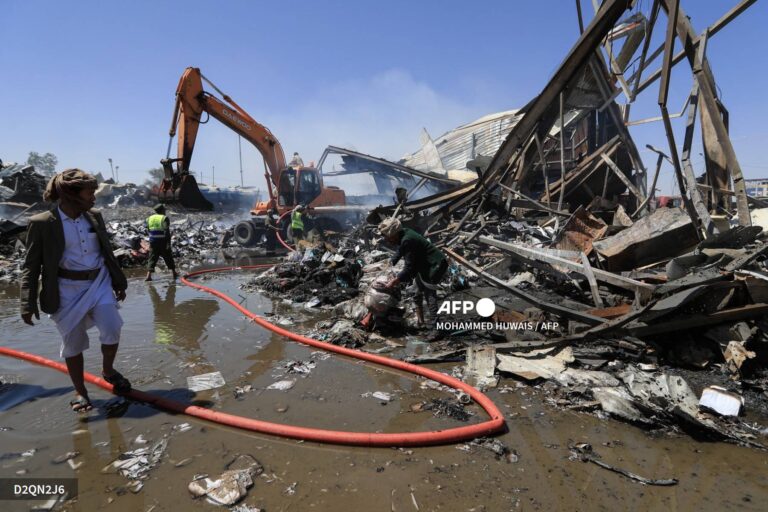
On July 4, it said operatives established an illegal checkpoint on the road, intercepted a truck carrying NGO food supplies, and set it ablaze.
It was the third such arson attack on the route in under three weeks.
A day earlier, it said ISWAP operatives infiltrated Geidam local government area in Yobe State and burned a truck loaded with pharmaceutical cargo bound for Chad.
“With no comparable targeting of ordinary civilian traffic reported, the pattern points to deliberate selection of humanitarian aid cargo, a tactic calculated to intimidate commercial transporters, deter them from contracting with aid organisations, and progressively strangle the supply of essential commodities into the garrison towns of the Lake Chad basin,” SARI Global stated.
The report also disclosed that the Department of State Services had issued an alert over credible intelligence that armed groups were planning coordinated attacks in Michika, Adamawa State, and Askira Uba, Borno State.
The alert was reportedly intended to register the collapse of a ceasefire deal, with government officials, councillors, district heads, religious leaders, and residents named among the likely targets.
On the attribution of violence, the report said government-affiliated forces were the most frequent initiating actor in July, linked to 266 of the 596 recorded incidents, driven by a high tempo of law-enforcement operations, arrests, seizures, and checkpoints, but were tied to only 110 of the 570 confirmed fatalities.
Non-state armed actors, on the other hand, initiated 186 incidents in total, yet were linked to 290 deaths, the highest of any actor category and nearly three times the toll attributed to government forces.
Unknown or unattributed actors accounted for 108 deaths from 62 incidents, while civilians were linked to 49 deaths from 38 incidents.
Criminal actors were linked to 13 deaths from 28 incidents, and political actors to seven incidents with no confirmed deaths.
“The gap between activity and control is the analytical point. A busy security apparatus is conducting many operations, but those operations are not translating into a suppression of the lethal threat, which continues to sit with bandits and insurgents across the rural North-West, Middle Belt and North-East,” the report said, adding that “a busy security apparatus is not the same as an improving environment.”
The report also described President Bola Tinubu’s creation of four additional Army Divisions as a strategic response to the security crisis which has expanded beyond the Northeast where it originated.
In the Army reorganisation, the 7th Division in Maiduguri still retains responsibility for Borno and Yobe states, while a new 10th Division based in Jalingo will oversee Taraba and Adamawa states, with a new 9th Division in Ilorin to cover Kwara and Niger states.
SARI Global warned, however, that the expansion could generate new risks alongside its intended security benefits, including friction at checkpoints, longer movement delays for aid convoys, and secondary displacement.