 admin
admin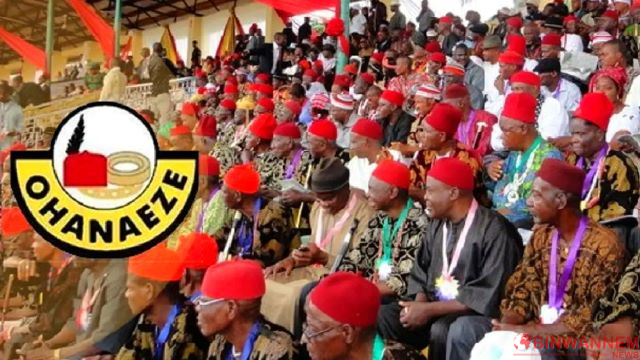
By Okechukwu Nwanguma
The disturbing allegations surrounding Wawa Military Barracks and the unidentified bodies reportedly found in Imo demand questions, accountability and justice – not silence.
There are moments when silence ceases to be neutrality. It becomes a failure of leadership.
As an advocate of human rights and the rule of law, I am deeply troubled by the disturbing reports concerning the alleged prolonged detention of civilians at Wawa Military Barracks in Niger State, including persons reportedly arrested during security operations in the Southeast, and the equally disturbing reports concerning large numbers of unidentified bodies reportedly found in or moved from mortuaries in Imo State.
I do not present these allegations as established facts. They must be independently and impartially investigated.
But that is precisely the point.
Why are so many of those who should be asking questions not asking them?
Where is the leadership of Ohanaeze Ndigbo?
Where are the Southeast governors?
Where are the senators, members of the House of Representatives, ministers and other political leaders of Igbo extraction?
Where are the traditional rulers and religious leaders?
Where are the influential lawyers, academics, business leaders and professional associations?
Where are the civil society leaders of Igbo extraction and other influential organisations that have the voice, access and standing to demand answers?
Why is there so much silence?
I am not asking anyone to establish guilt before investigation
Let me make this clear from the outset.
I am not saying that everyone detained at Wawa is innocent.
I am not saying that the unidentified bodies in Imo are victims of unlawful killing.
I am not asserting that the two developments are connected.
Those are matters for evidence and investigation.
What I am saying is much simpler:
Where there are credible allegations that citizens may have been unlawfully detained, tortured, disappeared or killed, responsible leaders have a duty to ask questions.
And where large numbers of unidentified bodies are reportedly found in government-controlled mortuaries, the authorities have a duty to explain who the dead are, how they died and how their remains came to be there.
That is not politics.
That is not ethnic agitation.
That is not support for criminality.
It is the most basic demand of the rule of law.
What happened to our young people?
The reports concerning Wawa are particularly disturbing because of allegations that civilians arrested during security operations in the Southeast may have been transferred there and held for prolonged periods.
Some reports speak of people being held incommunicado, denied access to lawyers and families, subjected to degrading conditions and, allegedly, torture and other forms of ill-treatment.
If these allegations are established, we must ask a more profound question:
What is happening to the young people of the Southeast?
A society can suffer generational damage without its young people being killed in large numbers.
Take away their liberty.
Keep them in detention for years.
Deny them education.
Separate them from their families.
Destroy their livelihoods.
Expose them to trauma.
Make them disappear from society.
And allow them to emerge believing that the State has no regard for their rights.
That is how youth and generational atrophy occurs.
It is how a generation loses its productive years, its confidence, its sense of belonging and, ultimately, its faith in democratic institutions.
And when young people lose faith in lawful institutions, the consequences can be dangerous for everyone.
Ohanaeze Ndigbo must answer the question of leadership
I find the apparent silence of the leadership of Ohanaeze Ndigbo particularly difficult to understand.
What is the purpose of an organisation that claims to represent the interests of Ndigbo if it cannot speak when Igbo citizens may be facing grave violations of their rights?
Leadership is not demonstrated only through political negotiations, appointments, elections, zoning arrangements or access to government.
Leadership is tested when ordinary people are vulnerable.
If Igbo youths are being unlawfully detained, Ohanaeze should ask questions.
If people have disappeared, Ohanaeze should demand answers.
If unidentified bodies are discovered in the Southeast, Ohanaeze should demand an independent investigation.
If allegations prove false, the investigation will establish that.
But silence does not establish the truth.
It merely leaves the families of the affected persons alone with their anguish.
And what about the Southeast governors?
The governors of the Southeast cannot afford to treat this as somebody else’s problem.
Yes, the military and other federal security agencies operate under federal authority.
But the victims, families and communities affected are citizens of the Southeast.
The governors have political authority, public platforms and constitutional responsibilities concerning the welfare and security of the people they govern.
They should be asking the Federal Government and security agencies:
Who was arrested?
Where were they taken?
How long were they held?
Under what legal authority?
Who has died in custody?
Where are the records?
Who are the unidentified dead?
Have families been notified?
Have independent forensic examinations been conducted?
These are reasonable questions.
Indeed, refusing to ask them is harder to justify than asking them.
Political leaders cannot be vocal only when elections are near
One of the most disappointing features of our political culture is how quickly political leaders discover their voices when elections approach.
They organise rallies.
They issue statements.
They mobilise communities.
They condemn perceived political insults.
They fight over positions.
But when ordinary citizens are allegedly detained, tortured, disappeared or killed, many suddenly become silent.
That is not the kind of leadership the Southeast needs.
A senator representing an Igbo constituency should be able to ask questions about the fate of citizens from that constituency.
A member of the House of Representatives should be able to demand accountability.
A governor should be able to insist that citizens are protected.
A minister should be able to raise concerns within government.
Political leadership should not end where political convenience begins.
The silence of civil society is equally troubling
I also challenge civil society leaders of Igbo extraction.
Human rights cannot be defended selectively.
We cannot speak loudly when violations occur elsewhere and suddenly become cautious when allegations concern people from our own communities.
Nor should we wait until every allegation has been judicially proved before demanding investigation.
The purpose of human-rights advocacy is often to insist that allegations be properly investigated, evidence preserved and victims protected.
The appropriate position is neither to declare the allegations true nor to dismiss them.
It is to say:
Investigate. Establish the facts. Protect the victims. Hold perpetrators accountable if wrongdoing is established.
That is the position I have consistently advocated as a human-rights and rule-of-law advocate.
Have we forgotten the Ezu River?
There is another reason why the present reports should deeply trouble us.
In January 2013, the discovery of numerous decomposing bodies floating in the Ezu River in Anambra State shocked Nigeria.
Who were they?
Where did they come from?
How did they die?
Who put them there?
Were they victims of crime, security operations or something else?
These questions generated enormous public concern.
Yet, more than a decade later, the full truth about the Ezu River tragedy has not become the definitive public record that the victims and their families deserved.
Accountability and justice were not satisfactorily achieved.
That unresolved episode should be a warning to us.
We cannot allow another Ezu River.
We cannot allow unidentified bodies to become forgotten statistics.
We cannot allow missing persons to disappear from public memory.
We cannot allow the passage of time to destroy evidence and erase responsibility.
This is not about defending IPOB or criminality
There will inevitably be attempts to frame questions about Wawa as a defence of IPOB, separatism, terrorism or criminality.
That would be a dishonest distraction.
If anyone has committed a crime, let the person be investigated and prosecuted.
If there is sufficient evidence, let a competent court determine guilt.
But the State cannot respond to criminality by abandoning the law.
If there is evidence, prosecute.
If there is no evidence, release.
If someone died in custody, establish how and why.
If someone disappeared, establish what happened.
If unidentified bodies exist, identify them.
If security personnel committed crimes, hold them accountable.
That is not anti-security.
That is the rule of law.
The greater danger is generational
What concerns me most is not only what may have happened to individual victims.
It is what repeated impunity can do to an entire generation.
Imagine being a young person in the Southeast and watching fellow youths disappear after arrest.
Imagine hearing allegations of torture and prolonged detention.
Imagine families searching for their children for years.
Imagine unidentified bodies appearing in mortuaries without clear explanations.
Imagine seeing no powerful institution willing to ask questions.
What conclusion would that young person draw about the State?
What conclusion would he draw about democracy?
What conclusion would he draw about the courts?
What conclusion would he draw about peaceful civic engagement?
The danger is that young people may conclude that the law offers them no protection.
That is fertile ground for alienation, radicalisation and violence.
If we genuinely care about peace and security in the Southeast, we must care about justice.
The silence must end
I therefore appeal – not as a representative of any organisation, but in my capacity as an advocate of human rights and the rule of law – to those who have the power and influence to speak.
To the leadership of Ohanaeze Ndigbo:
Speak for the people.
To the Southeast governors:
Ask questions and demand answers.
To our senators, members of the House of Representatives and other political leaders:
Use your offices to demand accountability.
To traditional and religious leaders:
Stand with the families seeking answers.
To lawyers, academics, professionals and business leaders:
Do not look away.
To civil society organisations and human-rights defenders:
Do not allow political convenience to determine whose rights deserve defence.
And to the National Human Rights Commission:
– Investigate.
– Go to Wawa.
– Establish who is and who was detained there.
– Establish the legal basis for their detention.
– Speak privately with detainees.
– Investigate allegations of torture and ill-treatment.
– Establish whether anyone died in custody.
– Investigate the unidentified bodies in Imo.
– Preserve the evidence.
– Identify the dead.
– Find the missing.
– Inform the families.
– And where violations are established, ensure accountability.
We owe the dead the truth.
We owe the missing a search.
We owe their families answers.
But, above all, we owe our young people a future in which their lives, liberty and dignity are protected by law.
The Southeast has already paid too high a price in human lives and lost opportunities.
We must not allow another generation to become victims of silence.
Silence is not peace.
Impunity is not security.
And asking questions is not betrayal.
It is citizenship.
It is leadership.
It is the rule of law.
Okechukwu Nwanguma
Human Rights and Rule of Law Advocate
24 August, 2026