 admin
admin
By Okechukwu Nwanguma
For years, discussions about reforming the Nigeria Police Force have revolved around legislation, training, funding, technology, and institutional restructuring. These are undoubtedly important. Yet, experience from countless engagements with police commands across Nigeria suggests that one factor consistently determines whether reform succeeds or fails: leadership.
The quality of leadership at the command level often determines whether a police command becomes a place where professionalism flourishes or where corruption, abuse, extortion, and impunity thrive. A Commissioner of Police who insists on accountability sends a clear message throughout the chain of command that misconduct will not be tolerated. Conversely, where leadership is indifferent or protective of abusive officers, impunity becomes institutionalized.
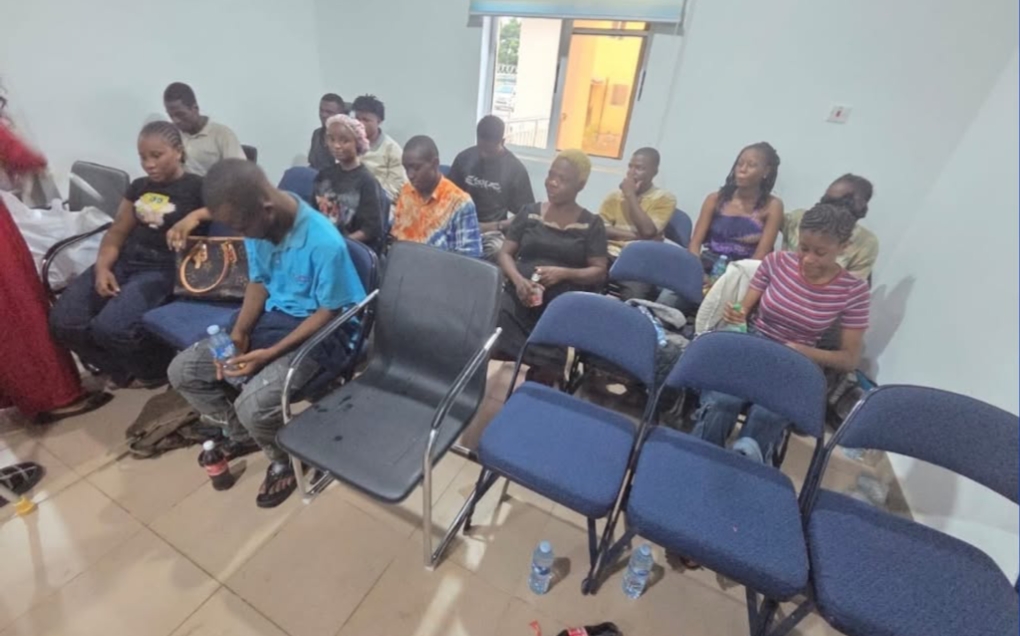
A recent case in Lagos illustrates this point. RULAAC petitioned the Commissioner of Police over the arbitrary arrest, incommunicado detention, and denial of access to an innocent traveller who had been swept up in a police operation merely because he happened to be lodging in the same hotel as a suspect. Within hours of receiving the petition, the Commissioner personally intervened, ordered a review of the matter, and the innocent citizen was released. Such prompt action demonstrated that many violations attributed to “the police” are not inevitable. They persist because supervisors sometimes choose not to act. When they do act, justice can be delivered swiftly.
This example is not isolated. In Kano State, the Commissioner of Police has demonstrated a commendable commitment to combating corruption and custodial abuse. By installing CCTV cameras in detention facilities within the State Police Headquarters, he is able to monitor police cells directly, discourage torture and extortion, and ensure greater accountability among officers. Efforts have also been made to improve detention conditions, recognising that every person in custody retains their constitutional rights and human dignity.
Similarly, the Commissioner of Police in Abia State has shown remarkable openness to scrutiny. Rather than shielding detention facilities from public oversight, he has welcomed independent inspection of police cells and maintained a receptive disposition towards constructive engagement with civil society. Such transparency builds public confidence and encourages continuous institutional improvement.
These positive examples are not occurring in a vacuum. They are consistent with, and have undoubtedly been encouraged by, the leadership, policing doctrine, and repeated directives of the Inspector-General of Police, who has consistently emphasised professionalism, respect for human rights, accountability, intelligence-led policing, and improved public trust. Where Commissioners faithfully translate these directives into practical supervision and command responsibility, the results are evident. The challenge lies not in the absence of sound policy direction from the Force Headquarters but in ensuring faithful implementation across all state commands.
Unfortunately, these examples stand in sharp contrast to the attitude of some other Commissioners of Police who continue to resist external scrutiny, dismiss legitimate complaints, and shield officers accused of corruption, torture, unlawful detention, extortion, and other serious abuses. In such commands, victims struggle to obtain justice while abusive officers receive the message that they enjoy institutional protection. Such resistance not only undermines public confidence but also frustrates the reform agenda championed by the Inspector-General of Police.
The lesson is clear. Reform is not only about changing laws or increasing budgets. It is also about changing organisational culture, and culture changes only when leaders lead by example. Commissioners who respond promptly to complaints, investigate allegations impartially, inspect detention facilities regularly, discipline erring personnel, and engage openly with civil society demonstrate that reform is possible within the existing institutional framework.
The Nigeria Police Force already possesses many of the legal tools required to promote accountability. The Nigeria Police Act, the Force’s disciplinary regulations, and constitutional safeguards provide sufficient authority to curb many abusive practices. What is often lacking is the willingness to enforce these standards consistently.
Leadership is contagious. Ethical leadership inspires ethical policing. Accountable leadership produces accountable officers. Where senior officers reward professionalism instead of corruption, respect for human rights instead of brutality, and service instead of predation, lower-ranking personnel inevitably adjust their conduct.
The police institution is frequently judged by its worst officers. Yet there are dedicated leaders within the Force proving every day that things can be done differently. Their examples deserve recognition not merely as isolated successes but as models for institutional transformation.
The challenge before the Inspector-General of Police is to ensure that such leadership becomes the norm rather than the exception. Commissioners who promote accountability and faithfully implement the Inspector-General’s vision should be recognised, supported, and rewarded. Those who tolerate corruption, resist transparency, or protect abusive officers should themselves be held accountable for command failures.
Nigeria does not lack reform blueprints. Nor does it lack sound policy direction from the leadership of the Nigeria Police Force. What is needed is consistent, courageous, ethical, and accountable leadership at every command level to translate those principles into everyday policing. Until leadership changes, abusive policing will remain entrenched. But wherever principled leadership aligns with the Inspector-General’s reform vision, reform ceases to be an aspiration – it becomes a reality.
Okechukwu Nwanguma is the Executive Director of the Rule of Law and Accountability Advocacy Centre (RULAAC).