 admin
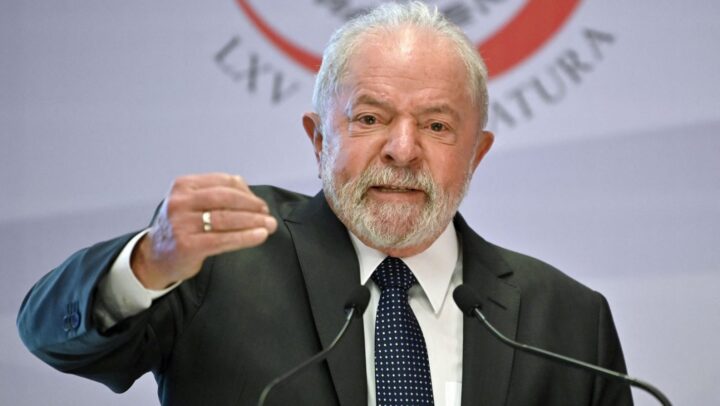
Brazilian President Luiz Inácio Lula da Silva has won a fourth presidential term, defeating right-wing challenger Flávio Bolsonaro with 51.7 percent of the vote in a closely contested election.
Lula was re-elected on Sunday, securing 64,241,049 votes, while his opponent garnered 59,818,781 votes, representing 42.22 percent of the total. More than four million votes were declared invalid.
His win comes after a supreme court justice ordered polls in the run-off to stay open for two more hours over complains by Lula about bus shortages in cities run by allies of Bolsonaro.
Lula’s victory gives him another four years to pursue his pledge to end deforestation by 2030, following a decline in forest loss during his current administration.
The president had lost the first round of voting to Bolsonaro earlier in October, raising questions about his political future and leaving his supporters uncertain about the outcome.
However, he overturned the deficit in the runoff, winning by 4.3 million votes after trailing his opponent by 2.2 million votes in the first round.
The result marks a rare political turnaround in Brazil, where no candidate who finished second in the first round had won the presidential runoff since the country returned to democracy in the 1980s.
Lula first became president in 2003 and served two consecutive terms before leaving office in 2011, as required by the constitutional limit on consecutive presidential terms.
He returned to power in 2023 after defeating Jair Bolsonaro, Flávio’s father and the incumbent president at the time, in the 2022 election.
Jair Bolsonaro was subsequently jailed for his role in a failed coup plot.
A BLOW TO TRUMP
Flávio Bolsonaro’s defeat also represents a setback for the Bolsonaro family and US President Donald Trump, an ally of the family who has supported the emergence of right-wing leaders across Latin America.
Lula previously warned against US interference in Brazil’s electoral process.
Beyond domestic politics, the election result is expected to shape Brazil’s approach to environmental protection, climate diplomacy and Indigenous land rights.
Lula’s administration has prioritised environmental protection and international climate cooperation, including Brazil’s hosting of the 30th United Nations Climate Change Conference (COP30) in Belém in 2025.
His government has also pledged to implement Brazil’s commitments under the Paris Agreement and advance the transition away from fossil fuels.
However, plans to expand oil production have drawn criticism from environmental advocates, who say the country’s climate ambitions must be matched by action to curb fossil fuel development.
Lula’s ability to advance his environmental agenda could also be constrained by a right-leaning congress, particularly on legislation concerning deforestation, conservation and Indigenous land rights.
Maurício Voivodic, executive director of WWF-Brazil, said Lula’s victory offered an opportunity to sustain progress in reducing deforestation and strengthen the country’s international role in climate and biodiversity protection.
“Lula’s victory offers an opportunity to sustain the reduction in deforestation and strengthen Brazil’s international role on climate and biodiversity,” Voivodic said.
He expressed concern that the composition of the new congress could pose challenges to environmental protection.