 admin
admin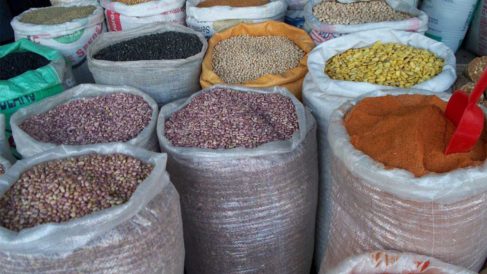
The National Bureau of Statistics (NBS) says Nigeria’s headline inflation rate has dropped to 15.1 percent in January, down from the 15.15 percent recorded in December 2025.
The NBS announced the increase in its consumer price index (CPI) on Monday.
“The January 2026 Headline inflation rate showed a decrease of 0.05% compared to the December 2025 Headline inflation rate,” the NBS said.
“On a year-on-year basis, the Headline inflation rate was 12.51% lower than the rate recorded in January 2025 (27.61%).
“This shows that the Headline inflation rate (year-on-year basis) decreased in January 2026 compared to the same month in the preceding year (i.e., January 2025).
“On a month-on-month basis, the Headline inflation rate in January 2026 was -2.88%, which was 3.42% lower than the rate recorded in December 2025 (0.54%).
“This means that in January 2026, the rate of increase in the average price level was lower than the rate of increase in the average price level in December 2025.”
FOOD INFLATION RATE STOOD AT 8%
The statistics firm also said the food inflation rate for January was 8.89 percent on a year-on-year basis.
This, the bureau said, is 20.74 points lower compared to the rate recorded in December 2025 (29.63 percent).
“On a month-on-month basis, the food inflation rate in January 2026 was -6.02%, down by 5.66% compared to December 2025 (-0.36%),” the report said.
“The decrease can be attributed to the rate of decrease in the average prices of Water Yam, Eggs, Green Peas, Groundnut Oil, Soya Beans, Palm Oil, Maize (Corn) Grains, Guinea Corn, Beans, Beef Meat, Melon (Egusi) Unshelled, Cassava Tuber, Cow Peas (White) etc.
“The average annual rate of food inflation for the twelve months ending January 2026 over the previous twelve-month average was 20.29%, which was 18.18% points lower compared with the average annual rate of change recorded in January 2025 (38.47%).”
The NBS further said in January 2026, food inflation was the highest year-on-year in Kogi (19.84 percent), Benue (18.38 percent), and Adamawa (17.29 percent).
On the other hand, states such as Ebonyi (1.69 percent), Abia (3.23 percent), and Imo (3.74 percent) recorded the slowest rise in food inflation on a year-on-year basis.
On a month-on-month basis, however, food inflation in the month under review was reportedly highest in Imo (-1.26 percent), Akwa Ibom (-2.21 percent) and Zamfara (-2.96 percent).
The bureau said Yobe (-11.88 percent), Nasarawa (-9.06 percent), and Sokoto (-8.31 percent) recorded a decline in food inflation on a month-on-month basis.