 admin
admin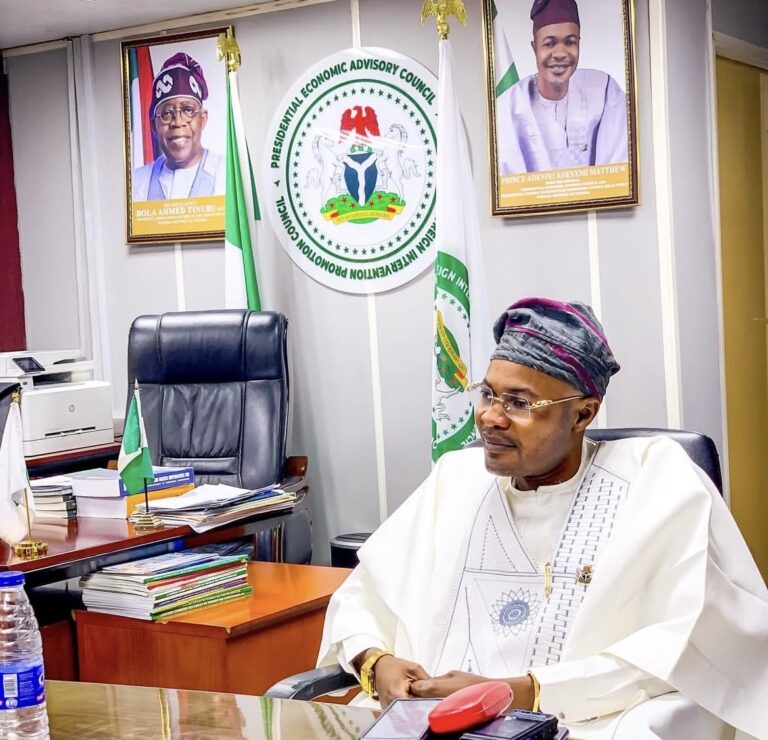
The House of Representatives ad hoc committee investigating the alleged establishment of the Presidential Foreign Investment Promotion Council (PFIPC) without legal backing has summoned the minister of foreign affairs and the national security adviser (NSA) to explain how the council allegedly operated despite concerns over its legitimacy.
The summons followed the submission of a memorandum by the Permanent Secretary of the Ministry of Foreign Affairs, Mr Dunoma Umar Ahmed, which stated that it had no official dealings with the council and had, instead, sought clarification from the Office of the National Security Adviser after detecting irregularities in its correspondence.
Appearing before the committee panel on Tuesday with a letter dated July 21, 2026, the ministry’s permanent secretary disclosed that Prince Adeniyi Adeyemi, who presented himself as director-general of the Presidential Economic Advisory Council/Presidential Foreign Investment Promotion Council (PEAC/PFIPC), approached the ministry three times seeking its collaboration and endorsement to organise a World Investment Summit in Nigeria.
The ministry said the requests were received on June 26, 2025; August 5, 2025; and June 5, 2026, but were not acted upon.
According to the letter, “Guided by extant rules and regulations as well as the necessity of carrying out due diligence before obliging any request, the Ministry… did not take any action on the requests.”
It added that “the Ministry’s refusal to oblige the requests was further necessitated by some of the discrepancies observed in the letters submitted by Prince Adeyemi and the ongoing investigation on the legitimacy of the PFIPC and the personality of its alleged director-general.”
The ministry further revealed that it wrote to the Office of the National Security Adviser on October 16, 2025, seeking clarification on the status of Prince Adeyemi.
According to the ministry, the NSA responded on November 26, 2025, indicating that enquiries made with the Office of the Secretary to the Government of the Federation and the Office of the Chief of Staff to the President showed that “Prince Adeniyi Adeyemi Mathew is unknown to any office of the Federal Government”.
The ministry also categorically informed the committee that it had no relationship with the council.
It stated that “the Ministry did not participate in any diplomatic engagement or bilateral and multilateral discussions held by the PFIPC” and that “the Ministry has never had any official interaction or engagement with the PFIPC or its alleged Director-General.”
Questioning the ministry’s response, committee member Hon. Abubakar Hassan Fulata asked why stronger measures were not taken after the ministry received confirmation that the council lacked legal recognition.
“After confirming from the Office of the Secretary to the Government of the Federation and the Office of the Chief of Staff to Mr President that this entity does not exist legally, did you communicate to the so-called Director-General… that this organisation is illegal and that you should not interact with it any further?” Fulata asked.
Responding to the concerns, the committee chairman said the ministry had acted appropriately by referring the matter to the national security adviser but insisted that the security office must now account for what followed.
“The Office of the National Security Adviser should appear before this committee and explain that aspect,” he said.
He added, “Foreign Affairs received correspondences from this agency under investigation. They noticed discrepancies and requested the Office of the NSA to find out the status of the agency. The NSA responded that it is an illegal agency. What has the Office of the NSA done as a security office after discovering that the agency does not exist? I think they should take action, so they should tell us the action they have taken.”
Lawmakers also questioned how the alleged council was able to engage foreign diplomats despite the ministry’s position that it had no dealings with it.
One lawmaker said, “I remember seeing they organised some sort of summit whereby they invited over 30 embassies, and they attended.”
The committee chairman said the issue exposed weaknesses in coordination among government institutions.
“Our responsibility is to make laws. Then a strange agency that is supposed to do our function is introduced to us. We notice discrepancies, report to the NSA, and the NSA responds that the agency is illegal, then all of a sudden we see the agency engaging foreign nationals in diplomatic functions that need to be coordinated by the Ministry of Foreign Affairs,” he said.
Describing the situation as unacceptable, he added, “Somebody will outsmart agencies, form a fake agency, get documents and approvals from agencies, and conduct diplomatic engagements with foreign nationals. I think this is a big insult on the Nigerian people.”
Responding on behalf of the ministry, the Permanent Secretary of Foreign Affairs acknowledged that some organisations occasionally bypass established diplomatic channels.
“Sometimes we find that some of these organisations do direct missions without the permission of the Ministry. We always send circulars to inform them that it is necessary to follow the laid-down channels of communication,” he said.
While commending the ministry for providing useful information, the committee maintained that the investigation was far from over.
“You have done well by giving us the fundamentals of what you understand and the effort the ministry has made. We cannot say that you have not given us information that will help us,” the chairman said.
He, however, reminded the ministry that “the minister of foreign affairs still has to appear here on Thursday” and directed the committee secretariat to also invite the national security adviser to answer questions arising from the ministry’s testimony.