 admin
admin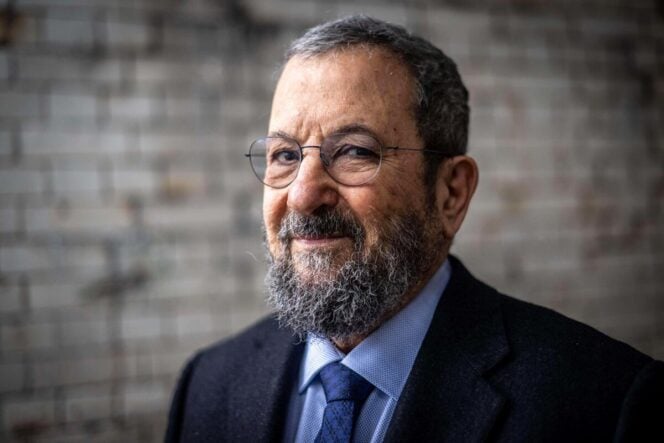
Jeffrey Epstein, American financier and child sex offender, worked with former Israeli Prime Minister Ehud Barak to profit from the Boko Haram insurgency in Nigeria, a Drop Site News (DSN) investigation relays.
Email exchanges released by the US Justice Department from 2018 showed how Epstein facilitated talks between Jide Zeitlin, then-chair of Nigeria’s Sovereign Investment Fund; and Sultan Ahmad bin Sulayem, former chairman of DP World, a United Arab Emirates (UAE)-based logistics giant.
Epstein died in a New York jail in 2019.
PROPOSED OIL DEALS
Part of the talks were centred on how Zeitlin could wield his influence in Nigeria to help Sulayem secure possible shipping terminals in Lagos and Badagry after talks with previous Nigerian presidents, since 2005, had led nowhere.
DP World was reluctant to invest in an industrial zone in Nigeria unless they could own the surrounding port outright.
Sulayem resigned from DP World on February 13 after his relationship with Epstein became public knowledge.
Epstein corresponded almost daily with Barak who worked tirelessly to grow an Israeli-Nigeria security relationship.
Epstein quietly began helping Barak leverage his security ties in Nigeria to set up energy investments for his friends in Israel — after Barak resigned as Israeli defence minister in 2013.
SPY TECH
Epstein explored other ways of penetrating Nigeria.
“We should think about the growing emerging role of cards and phones in economic exchange and the future of money,” Barnaby Marsh, an investment advisor and friend of Epstein, told him after the financier sent a snippet of “Tale of the Slave” to him.
Marsh also shared an article on the use of electronic identity cards and biometric databases in Nigeria.
In 2015, Barak and a business partner invested $15 million in FST Biometrics, a firm founded by Aharon Ze’evi Farkash, former head of Israeli military intelligence.
The company’s core technology, a biometric system known as Basel, was deployed at the crossing between Israel and Gaza to control the movement of Palestinian workers.
While the Nigerian military battled Boko Haram, Barak facilitated the sale of similar biometric surveillance equipment to Babcock University and framed it as a counter-terrorism measure to deter the Islamist extremists from attacking the Christian institution.
The technology was also touted as a way for African governments to control movement of populations at scale, with Israeli intelligence firms marketing the security architecture as “field-proven”.
The security cooperation offered an appealing way for Barak and Epstein to generate cash from chaos in Nigeria, while also promoting the political interests of the Israeli government, the DSN investigation noted.
In 2020, the World Bank subsidised a partnership with the Israel National Cyber Directorate and Toka Group, another ex-intelligence startup co-founded by Barak, to work directly on Nigeria’s national cybersecurity infrastructure.
The released emails showed that the security deals were only a cover for Barak to access Nigeria’s rich petroleum resources, with Epstein’s steady guidance.
Meanwhile in 2013, Nigerian legislators learned of a secret $40 million intelligence contract awarded by then President Goodluck Jonathan to Elbit Systems, an Israeli military technology giant, to develop online spying infrastructure.
The country’s house of representatives threatened to shut it down.
Barak later received an invitation to speak at a cybersecurity conference in Abuja, in September of the same year, two weeks after Epstein made an impromptu five-day trip to Africa.
Nigerian media urged speedy passage of a pending Cybercrime Bill, a comprehensive legal framework for online surveillance, after the house of representatives voted to suspend Elbit’s contract.
Two days after the cybersecurity conference, the senate voted to advance the bill.
Barak was prime minister of Israel from 1999 to 2001.