 admin
admin
The Taliban warned the United States not to “destabilise” the regime on Saturday during their first face-to-face talks since the US withdrawal, as a deadly sectarian bombing raised further questions about their grip on power.
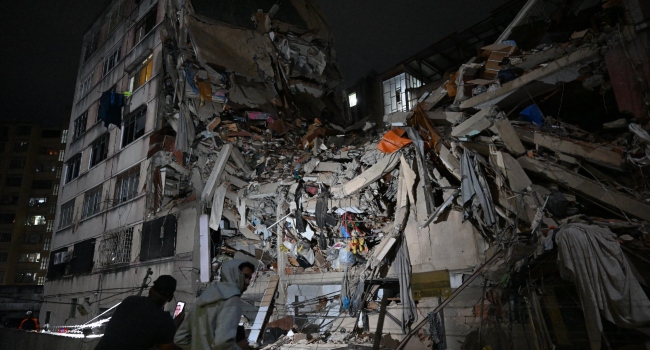
As mourners in northern Afghanistan buried their dead from an attack on a Shiite mosque that killed 62, a Taliban delegation told US officials in Doha that any weakening of their government could cause “problems for the people”.
Scores more worshippers were wounded in Friday’s blast in Kunduz, which was claimed by the Islamic State group — who appear to be attempting to further shake Afghanistan after the Taliban takeover.
“We clearly told them that trying to destabilise the government in Afghanistan is good for no one,” the Taliban’s foreign minister Amir Khan Muttaqi told the Afghan state news agency Bakhtar after the talks in the Qatari capital.
“Good relations with Afghanistan are good for everyone. Nothing should be done to weaken the existing government in Afghanistan which can lead to problems for the people,” he said, in a recorded statement translated by AFP.
The Taliban are seeking international recognition, as well as assistance to avoid a humanitarian disaster and ease Afghanistan’s economic crisis.
A State Department official said the US delegation would press the Taliban to ensure terrorists do not create a base for attacks in the country.
It would also pressure Afghanistan’s new rulers to form an inclusive government and to respect the rights of women and girls, the official said, stressing the meeting did not indicate Washington recognised Taliban rule.
“We remain clear that any legitimacy must be earned through the Taliban’s own actions,” the official said.
Taliban’s bitter rivals
As the two-day talks began, Kunduz counted the cost of the bloodiest assault since US forces left the country in August.
A gravedigger in the Shiite cemetery overlooking the city told AFP they had handled 62 bodies, and local reports suggested the final toll could be up to 100.
The regional branch of IS, known as Islamic State-Khorasan (IS-K), has repeatedly targeted Shiites in Afghanistan. It is a Sunni Islamist group like the Taliban, but the two are bitter rivals.
IS-K said the attack was carried out by a Uyghur suicide bomber who had “detonated an explosive vest amid a crowd” of Shiite worshippers.
The attack happened during Friday prayers — the most important of the week for Muslims — and residents of the city told AFP that hundreds of worshippers were inside.
In a heart-wrenching scene, relatives gathered around the newly-dug graves in Kunduz wailed inconsolably over their loved ones.
“We are really hurt by what happened,” Zemarai Mubarak Zada, 42, told AFP as he mourned his 17-year-old nephew, who he said had wanted to follow in his footsteps and become a doctor.
“He wanted to get married. He wanted to go to university,” he said.
‘Terrifying’
The Taliban’s efforts to consolidate power have been undermined by a series of deadly IS-K attacks.
The Taliban security chief in Kunduz accused the mosque attackers of trying to foment trouble between Shiites and Sunnis.
“We assure our Shiite brothers that in the future, we will provide security for them and that such problems will not happen to them,” Mulawi Dost Muhammad said.
The attack was met with broad international condemnation, with UN chief Antonio Guterres calling for the perpetrators to be brought to justice.
Guterres “condemns in the strongest terms today’s horrific attack”, the third against a religious institution in Afghanistan in a week, his spokesman said.
Viewed as heretics by Sunni extremists such as IS, Shiite Muslims have suffered some of Afghanistan’s most violent assaults, with rallies bombed, hospitals targeted and commuters ambushed.
Shiites make up about 20 percent of the Afghan population. Many of them are Hazara, an ethnic group that has been persecuted for decades.
Michael Kugelman, a South Asia expert at the Woodrow Wilson International Center for Scholars, told AFP the Taliban would find it difficult to consolidate power unless they tackle terrorism and the growing economic crisis.
“If the Taliban, as is likely, is unable to address these concerns, it will struggle to gain domestic legitimacy, and we could see the emergence of a new armed resistance,” he said.
AFP