 admin
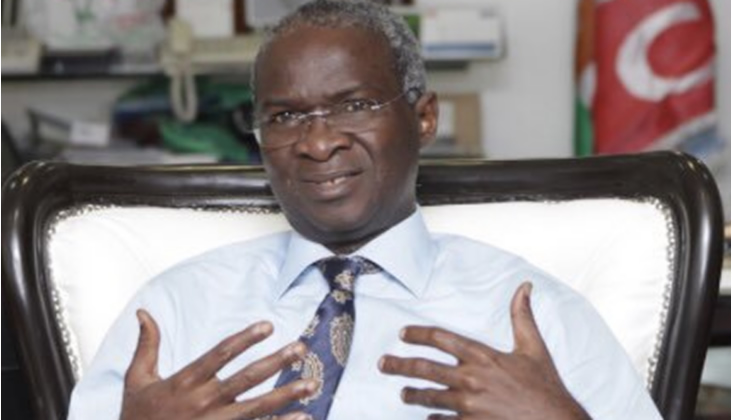
The Federal Government has approved a Federal Roads and Bridges Tolling Policy and Regulations, presidential aide, Tolu Ogunlesi has said.
According to Ogunlesi, who is a Special Assistant to the President on Digital and New Media, the government made the decision on Wednesday at a Federal Executive Council meeting in Abuja.
In a statement posted on his official Facebook page, he quoted the Minister of Works and Housing, Babatunde Fashola, to have said that the regulations were developed after extensive consultations with various stakeholders within and outside the government, including transport unions like National Union of Road Transport Workers, Road Transport Employers’ Association Of Nigeria, amongst others.
He listed the recommended tolling fees in the approved policy and regulations to include “Cars: N200; SUVs: N300; Private Buses: N300; Commercial Buses: N150; Luxury Buses and Trucks: N500”.
The statement titled, ‘Nigeria Cabinet approves Federal Tolling Policy and Regulations’ also said “fees at existing tolled roads (Lagos and Abuja Airport Toll Plazas, and the Lekki and Ikoyi Toll Plazas) were taken into consideration” in reaching the new recommended pricing.
The statement listed 10 highlights of the new Federal Tolling Policy as follows:
“It will be an Open Tolling system (just like the one that used to be in existence in the country), instead of a Closed Tolling system. (A Closed Tolling system means that you pay per distance traveled (‘distance-dependent’), while Open Tolling means you pay a fixed/flat rate that is not dependent on distance traveled).
“Only dual carriageways owned by the Federal Government will be eligible for tolling by the Federal Government. (Of the 35,000km of Federal Roads in existence in the country, only 5,050km are dual carriageway). Federal carriageways that are single, i.e. undivided highways will not be tolled. The only exceptions here will be some bridges, which are listed in the Policy.
“Toll Revenues will be used to maintain the roads and also to repay investors who have invested in building or completing a road under the Highway Development Management Initiative.
“Electronic Toll Collection and Management systems will be prioritized over Cash systems.
“The following will be exempted from Tolling: Bicycles, Tricycles, Motorcycles, Diplomatic vehicles, Military and Paramilitary vehicles.
“The Tolling Policy is a broad National framework that will serve as a guide for States and Local Governments who seek to implement their own Tolling Policies. (As noted earlier, only about 16% of the total road network in Nigeria belongs to the Federal Government. States own/control roughly the same amount as the FG, while the rest – amounting to two-thirds are last-mile roads belonging to and under the responsibility of Local Governments).
“People who live around Toll Plaza Areas will benefit from what is called ‘Frequent User’ discounts, in line with global best practice.
“Recommended Tolling Fees in the Approved Policy and Regulations are as follows:
“Cars: N200; SUVs: N300; Private Buses: N300; Commercial Buses: N150; Luxury Buses and Trucks: N500
“According to the Honorable Minister, the Federal Highways Act vests the power to toll (Federal Roads) in the Minister responsible for roads, but implementation of any tolling policy/regime involves many processes and multiple agencies, and therefore requires multi-stakeholder collaboration.
“According to the Minister, it is important to stress that even with this policy now approved, tolling is not going to start immediately. He very clearly said that Tolling will not start “until the roads are motorable.” This policy is a necessary condition for the implementation of Tolling, and it is now for people to start getting familiar with it and for relevant stakeholders to start using it as a basis for their financial modeling and investment analysis, ahead of the eventual rollout of Toll Plazas.”