 Pascal Arogorn Ibe
The World Bank projects that the number of poor people in Nigeria will increase by 20 million by 2022.
According to the bank’s Nigeria Development Update (NDU), an average Nigerian may witness a setback of decades of economic growth and the country could enter its deepest recession since the 1980s.
Shubham Chaudhuri, the bank’s country director for Nigeria, said: “Nigeria is at a critical historical juncture, with a choice to make. Nigeria can choose to break decisively from business-as-usual, and rise to its considerable potential by sustaining the bold reforms that have been taken thus far and going even further and with an even greater sense of urgency to promote faster and more inclusive economic growth.”
Figures from the 2019 poverty and inequality in Nigeria report by the National Bureau of Statistics (NBS) show that 40 percent of the total population, or almost 83 million Nigerians, live below the poverty line of N137,430 per year.
The World Bank in its update warned that the economy may shrink up to 4 percent in 2020 due to the COVID-19 pandemic and weak oil prices.
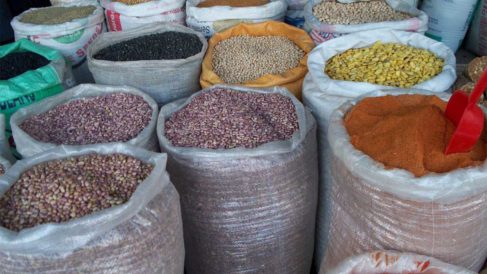
It noted that food insecurity has escalated while “economic precarity is on the rise because unemployed workers have migrated to the low-productivity agricultural sector.”
Marco Hernandez, World Bank’s lead economist for Nigeria, said: “Nigeria can build on its reform momentum to contain the spread of COVID-19, stimulate the economy, and enable the private sector to be the engine of growth and job creation. It can also redirect public spending from subsidies that benefit the rich towards investments in Nigeria’s people and youth in particular, and lay foundations for a strong recovery to help make progress towards lifting 100 million people out of poverty.”
The bank recommended that the Nigerian government persist in managing the domestic spread of COVID-19 until a vaccine is available for distribution, enhancing macroeconomic management to boost investor confidence, as well as safeguarding and mobilizing revenues.
It advised that national revenue should be earmarked for critical development expenditures, encouraging economic activity, providing relief items and access to basic services in rural communities.

 admin