 admin
admin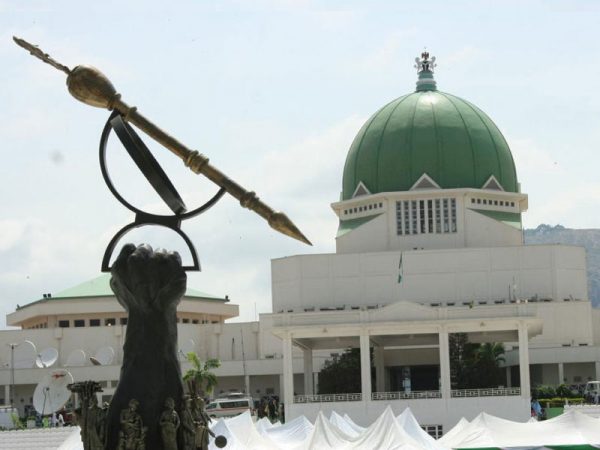
The National Assembly has rescinded some items in the 2025 Appropriation Bill passed by the Senate and House of Representatives last week after detecting errors in the line items under capital and recurrent expenditure.
Although the budget size remains at N54.99 trillion, the capital expenditure has been reduced by more than N500 billion, while the recurrent expenditure was increased by the same amount.
At plenary sessions on Tuesday, both the Senate and the House of Representatives made corrections to the figures previously passed for some ministries, departments, and agencies, with some figures increasing, while others were reviewed downward.
The Chairman of the House Committee on Rules and Business, Francis Waive (APC, Delta), who presented the motion for the rescission of the approved session items, said the action was necessary because “the Joint Appropriation Committee noticed errors in the figures earlier passed.”
“The final figure of N54.99 trillion, as well as the statutory transfer of N3.64 trillion and N14.32 trillion, remain unchanged. The recurrent (non-debt) expenditure of N13.56 trillion and the capital budget of N23.44 trillion were affected,” he explained.
In the document, the Ministries of Defence and Police Affairs, National Pension Commission, Universities Pensions, Office of the Head of the Civil Service of the Federation (civilian pensions), Pension Transition Arrangement Directorate, and a few other agencies had their budget estimates adjusted.
Waive added that the Presidency, Federal Ministry of Information and National Orientation, Office of the National Security Adviser, Office of the Secretary to the Government of the Federation, Federal Ministries of Agriculture and Food Security, Works, Labour and Employment, Transportation, Innovation, Science and Technology, Education, Environment, Health, and Social Welfare, among others, had their budget proposals increased for the 2025 fiscal year.
The Delta lawmaker emphasised that it was the duty of the House to make the corrections identified in the document during the compilation process by the Joint Committee, noting that the rescission and passage would not affect the N54.99 trillion budget size.